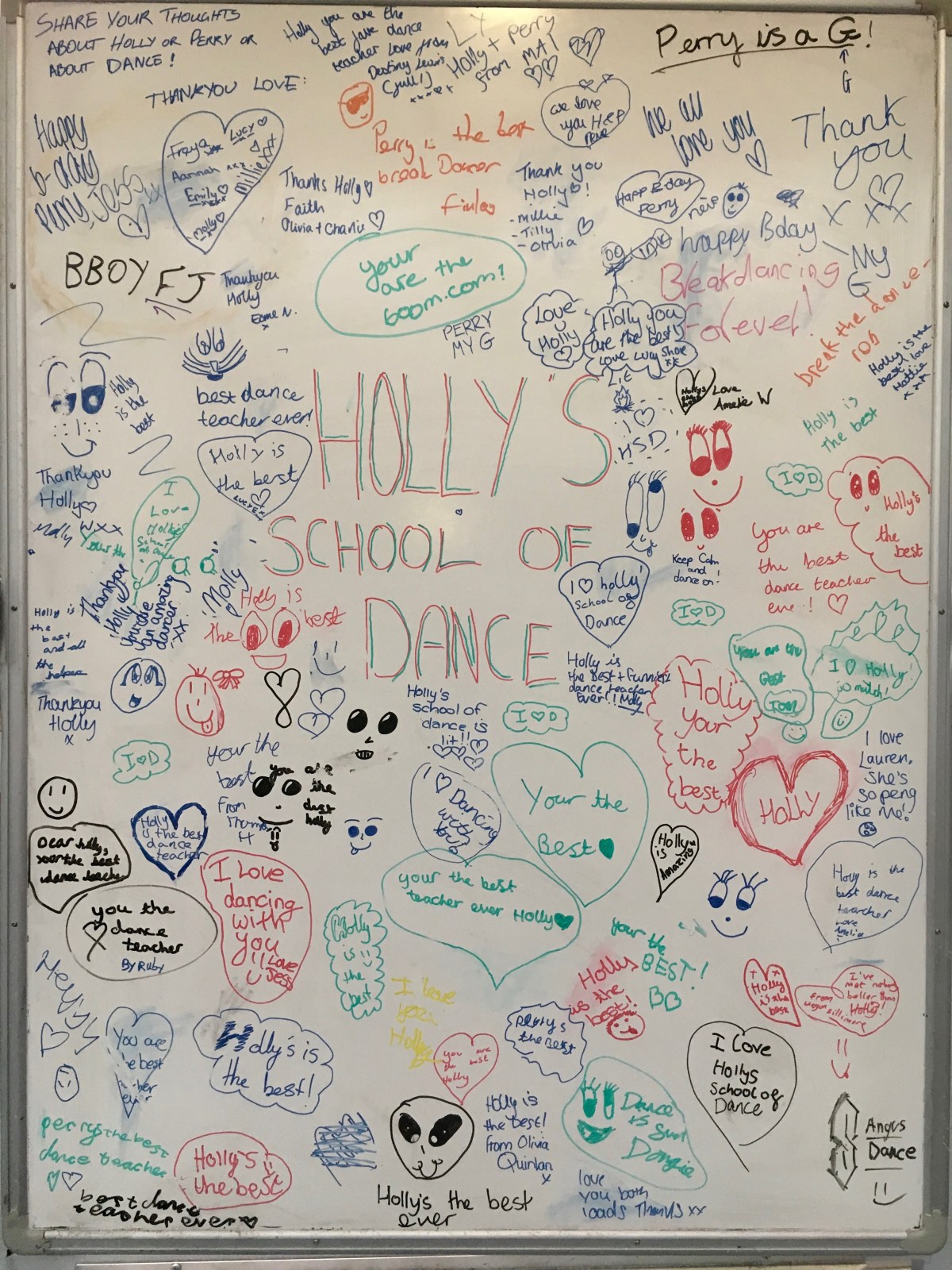

Holly’s School of Dance – Policies & Procedures
Reviewed: 26 October 2026
Next review: 26 October 2027
Policy lead: Holly Machemedze
Contact: hollyputtdance@live.co.uk
1. Child Protection
At school sessions: report safeguarding concerns immediately to the school’s designated safeguarding lead (DSL), safeguarding head or deputy, following the school’s procedure. Inform Holly as appropriate without delaying protection or breaching agency advice.
HSD lead: Holly Machemedze, hollyputtdance@live.co.uk. All HSD teachers, staff and volunteers report business concerns to Holly. At non-school activities, raise safeguarding concerns promptly with Holly.
If the concern involves Holly: contact Perry Machemedze on 07950 040152, and the school DSL/headteacher where relevant. If it involves Perry, contact Holly. An implicated person must not handle their own complaint. If both are unavailable or conflicted, contact the relevant external agency directly. For concerns about a school DSL, use the headteacher; for the headteacher, use the school’s governance route.
What to do when a child may be at risk:
Protect: call 999 for immediate danger or urgent medical help; keep all children supervised.
Listen: stay calm; let the child speak in their own words. Do not promise secrecy, ask leading questions, investigate or confront the alleged perpetrator.
Report: use the school DSL route, then a deputy/headteacher if unavailable. If there is delay, no action or ongoing risk, refer directly to social care/police. Anyone may refer without permission.
Record: promptly note the child’s words, dates/times, observations, people involved, action and referral. Separate facts from opinion; sign/date and share securely.
Follow up: confirm receipt and who is acting; escalate unresolved risk.
Involve parents unless DSL/social care/police advice indicates that doing so could increase risk or compromise an investigation. Necessary lawful safeguarding sharing does not depend on parental consent. Keep child-protection records separate and restricted.
Key contacts – checked 26 October 2026
Immediate danger / non-emergency police:
999 / 101
Surrey Children’s Single Point of Access:
0300 470 9100; cspa@surreycc.gov.uk
Monday-Friday, 9am-5pm. Call for urgent concerns.
Surrey Emergency Duty Team:
01483 517898 (urgent concerns outside office hours)
Surrey LADO – allegations about child-facing adults:
0300 123 1650 (option 3); LADO@surreycc.gov.uk
Independent help:
NSPCC: 0808 800 5000; Childline: 0800 1111
Keep each school’s DSL/deputy and out-of-hours arrangements with its risk assessment. Use the relevant local authority outside Surrey. Do not rely on email for emergencies.
2. Complaints Procedure
Raise concerns verbally or in writing with the teacher or Holly. Complaints about Holly go to Perry (contacts in section 1). Help children and anyone needing an accessible way to complain. Safeguarding concerns go immediately through section 1; they do not wait for this process.
Acknowledge within three working days. An unimplicated person investigates fairly, hears relevant accounts and keeps information confidential on a need-to-know basis. Aim for a written outcome within 10 working days, explaining findings, action and review options. Explain delays and give an updated timescale.
A dissatisfied complainant may request an impartial review; aim to respond within a further 10 working days. Use an external reviewer where internal independence is unavailable. Workers may raise a formal grievance without first using informal resolution, with statutory accompaniment rights where applicable. External reporting remains available and internal steps do not extend legal deadlines. Keep records under section 6.
3. Safeguarding & Staff Suitability
Recognise physical, emotional and sexual abuse, neglect, exploitation, grooming, domestic abuse, online harm and child-on-child abuse. Do not explain away concerns because of disability or communication needs. Use section 1, seeking specialist agency advice for other risks such as radicalisation, FGM or forced marriage and following any reporting duty applicable to the role.
Adult allegations: inform the school DSL/headteacher and unimplicated HSD lead immediately. Seek LADO advice without delay, normally within one working day, for possible harm, relevant crime, risk or unsuitability to work with children. Preserve evidence and agree the approach with LADO/police before internal investigation. Record lower-level concerns and patterns. Make a DBS referral when its statutory conditions are met, even if the person resigns.
Before deployment: check identity, suitability, references, work history, relevant qualifications and right to work where applicable. Assess DBS eligibility and obtain the appropriate Enhanced/Children’s Barred List checks for eligible roles. No unchecked worker is left alone with children. Assess lawfully disclosed convictions fairly; do not seek protected information. Keep checks confidential and record decisions.
DBS certificates have no official expiry. HSD’s policy is renewal at least every three years, sooner for a role change, concern or school requirement; use the Update Service only with consent and a matching certificate. Under-16s cannot obtain DBS checks. Young assistants remain children, have a named adult supervisor and assessed duties, and never take sole charge.
Daily practice: brief all staff/cover teachers; use respectful teaching, observable one-to-one work and clear boundaries. Explain necessary teaching contact, seek the child’s agreement and respect refusal. No humiliating punishment, sexualised remarks, secret relationships or personal pupil messaging. Agree toilet, changing and personal-care arrangements; preserve privacy. Staff must know the school reporting route and emergency plan.
4. Equal Opportunities
HSD will not tolerate unlawful discrimination, harassment or victimisation. Respect everyone regardless of background. Equality Act protections include age, disability, gender reassignment, marriage/civil partnership, pregnancy/maternity, race, religion/belief, sex and sexual orientation, as applicable to the situation.
Make reasonable adjustments, communicate accessibly and assess individual needs fairly. Use clear criteria for casting, crews and class placement; avoid stereotypes. Listen to children and respond to barriers or discriminatory conduct through sections 1, 2 or 10.
5. Health & Safety
Hired venues: HSD manages its activities, staff and pupil supervision. The school/venue operator manages the building and fixed safety systems within its responsibilities. Agree duties in the hire arrangements; neither party’s legal duties disappear. Obtain the fire plan, assembly point, site help contact, first-aid and access arrangements, including evenings/holidays.
Before every session: check floor, space, equipment, mirrors, exits and obvious electrical hazards. Keep children away from defects, report them to the operator and stop unsafe activity. Do not attempt electrical repairs. Use suitable staffing, warm-ups, progression, rest, hydration and age-appropriate movement. Assess lifts, acrobatics and unusual activities specifically. Keep individual school/event risk assessments available; these contain the site controls and L/S scores.
Emergencies: ensure a working phone, accessible first-aid kit, suitable first aider and known address. Evacuate safely, take the register if immediately available, account for everyone and do not re-enter until authorised. Plan for access needs. Get urgent medical help when needed. Record accidents/near misses and inform parents; Holly checks whether RIDDOR applies and reports within its legal timescale.
Medical needs: maintain current emergency contacts, allergies and agreed adjustments. Obtain clear consent/instructions for medication; only an authorised, competent adult administers and records it. Follow current infection advice. Keep essential information available securely to the responsible teacher.
Handover: agree when responsibility transfers from school/parent to HSD and back. Register attendance, authorised collectors and any independent-departure permission. Query unexpected non-arrival. For late collection, supervise the child and contact parents/site staff; seek social care advice if no safe arrangement is possible. Never leave a child alone or improvise a private lift.
Missing child: secure supervision of the group, alert school/site staff and Holly, check attendance/last location and coordinate a safe search. Contact police promptly if the child cannot be located or risk is immediate; no waiting period. Inform parents unless agencies advise otherwise. For threats, seek site help and call 999 if needed; avoid lone confrontation. Assess shows, food/allergies, travel, backstage and changing separately; check licensing and chaperone arrangements. HSD is not Ofsted registered. Check whether registration is required or an exemption applies before changing the ages, hours or type of provision.
6. Privacy & Data Use
Controller: Holly Machemedze, sole trader trading as Holly’s School of Dance.
Contact: hollyputtdance@live.co.uk.
We hold necessary pupil/parent, worker, booking, consent, attendance, financial, medical/access and incident information, supplied by families, workers, schools or relevant agencies. We explain new uses before starting them.
Why we use information
Bookings and parent administration:
Contract with the booking parent/customer; legitimate interests for pupil/emergency-contact records where they are not parties to that contract.
Attendance, collection and ordinary safety:
Legitimate interests in safe teaching, supervision and managing the service; a legal obligation where a specific duty applies. Assess necessity and children’s rights.
Routine medical/allergy and access needs:
Legitimate interests in safe participation plus explicit consent for health information under Article 9(2)(a). Ask separately; registration alone is not explicit medical consent. Discuss alternatives if refused/withdrawn.
Safeguarding, serious incidents and claims:
Record the applicable Article 6 basis: a relevant legal obligation, recognised legitimate interest where safeguarding conditions apply, or another valid basis. Sensitive data also needs a valid Article 9 condition and any required DPA safeguards/policy document. Use the legal-claims condition where applicable.
Publicity and marketing:
Separate consent for identifiable pupil photos/video used for publicity and for promotional emails. Refusal does not prevent registration. Keep evidence of the choice and allow withdrawal.
Finance and staff administration:
Contract, applicable tax/employment obligations, and legitimate interests in necessary complaint/claim evidence, as appropriate.
Where records are held and who receives them
Registration submissions are held in the WordPress website booking/form system. Teachers use registers with necessary emergency and medical details. Paper records are carried under staff control or kept securely in the home office. Use restricted accounts, strong passwords and multifactor authentication where available; keep paper in a closed folder/bag during use and locked storage otherwise. No unattended records in vehicles or public places.
Share only what is necessary with authorised teachers/chaperones, the school DSL, emergency services, social care/LADO/police, insurers/advisers and contracted booking/payment/email/storage suppliers for a justified purpose. Do not sell pupil data. Document supplier access and any international-transfer safeguards. Where the system also serves HipHop Inc, record the separate businesses’ roles and permitted access; shared software does not permit unrelated use.
Holly manages access, supplier arrangements, secure backups and removal of staff access on leaving. Retention also covers submissions, emailed copies and exports; backups follow a controlled overwrite cycle. No solely automated decisions with significant effects are introduced without separate assessment and notice.
Records retention and your rights
You may request access, correction, restriction, deletion or portability where applicable, and object to legitimate-interest processing. Children have their own rights. Requests normally receive a response within one month, subject to lawful exceptions/extensions. Withdraw optional consent through Holly; this does not invalidate earlier lawful use. Necessary safeguarding/legal records may remain. Complain to Holly or the ICO: ico.org.uk/make-a-complaint, 0303 123 1113.
Keep only what is needed and delete securely at expiry. The periods below are HSD policy choices, not universal GDPR deadlines. Check insurer, tax, contractual and agency requirements and preserve relevant records during a claim/inquiry. Record any justified extension and the eventual disposal.
Enquiries without a booking:
6 months after last contact, unless a separate marketing permission justifies minimal contact details.
Routine pupil registration, contacts, attendance and medical/access information:
While attending and for up to 12 months after leaving, keeping only what remains necessary. Remove obsolete details promptly. Preserve relevant extracts longer for incidents, finance, claims or safeguarding.
Marketing contacts and permissions:
Only minimal contact details and permission evidence while valid and needed; review annually. Stop marketing on withdrawal/unsubscribe. Keep a minimal do-not-contact record to honour the request.
Finance:
Necessary accounting/payment evidence: 6 years after the relevant accounting period, longer if a specific requirement applies. No complete card security details.
Accidents / injuries and related consent evidence:
For children, necessary claim evidence to age 25; for adults, 6 years after the incident. Extend only where justified, including insurer advice, incapacity or proceedings.
Child protection:
Review at age 25. Do not automatically destroy sexual-abuse, inquiry or claim records: seek safeguarding/legal advice and document any longer retention.
Allegations about child-facing adults:
Normal pension age or 10 years after the allegation, whichever is later, with case-specific agency/legal advice. Review low-level concern records at leaving; retain longer only for a documented reason. Treat proven false/malicious information appropriately.
Other complaints / personnel records:
Necessary records normally 6 years after closure/leaving; delete irrelevant material sooner. Safeguarding rules take precedence.
DBS / photos and videos:
Keep a restricted check log; justified temporary certificate copies normally no more than 6 months. Delete unused publicity material within 12 months; review published images annually and remove controlled copies on valid withdrawal. Retain necessary consent evidence.
Annual register refresh: replace obsolete working registers each April after confirming current emergency/medical details. Preserve necessary attendance/incident evidence; do not delete current pupils’ only safety information. Expired records are shredded/securely deleted, with a disposal record. Arrange a lawful records custodian if the business closes.
Data loss/breach: tell Holly immediately; contain it, record facts and assess risk. Notify the ICO within 72 hours where legally required, and affected people without undue delay where high risk requires it.
7. Online Safety & Social Media
Use official parent/school channels. No personal pupil messaging, social-media friendships, disappearing messages or private online relationships. Phones may support authorised music, registers, teaching and emergencies without distracting from supervision; pupils’ devices stay away unless agreed for learning/access needs.
Obtain recorded permission for identifiable pupil photography/video and each intended publicity purpose, and respect the child’s wishes. No disadvantage for refusal. Avoid unnecessary names, location tags or live whereabouts; no photography in toilets/changing areas. Use authorised devices/accounts and secure storage; any exceptional personal-device use needs agreed safeguards and prompt transfer/deletion. Do not upload pupil material to public AI tools.
Assess online lessons/platforms: use controlled access, clear parent arrangements, observable teaching and no unnecessary recording/private chat. Report online abuse/grooming through section 1. Preserve evidence safely; do not copy, forward or ask a child to send indecent child images. Seek DSL/police advice and call 999 for immediate danger.
8. Whistleblowing
Report unsafe practice, concealment or wrongdoing to Holly; if it involves Holly, use Perry. School safeguarding concerns go first to the school DSL or the alternative route in section 1. Anyone may report directly to social care, LADO or police without first using internal channels. Acas offers employment advice; Protect (protect-advice.org.uk) offers whistleblowing advice. Statutory whistleblowing protection depends on its legal conditions.
Take reports, including anonymous information, seriously. Keep clear records, restrict access, use an impartial handler and explain limits to confidentiality/anonymity. Do not retaliate against honest reporting or assistance. An unproven complaint is not automatically malicious. Follow agency advice before investigating child-facing allegations.
9. Anti-Bullying
Bullying can be physical, verbal, relational, discriminatory, sexual or online, often involving repetition and a power imbalance. Address a single harmful incident or sexual harassment immediately; do not wait for repetition. Children can tell any trusted teacher, with accessible reporting and support.
Protect those affected and witnesses, record concerns and use the school DSL/safeguarding route where needed. Understand accounts fairly, support all children involved and inform parents as appropriate under agency advice. Do not force confrontation or mediation. Use proportionate supervision, support, behaviour plans or exclusion where safety requires it; consider individual needs without excusing harm. Follow up until the child is safe and the behaviour stops.
10. Harassment Prevention & Reporting
HSD will take all reasonable steps to prevent sexual harassment and will not permit unlawful third-party harassment. This covers work and dance activities, school/community venues, shows, travel, social events and digital contact. A child safeguarding concern always follows section 1, including the school DSL route.
Sexual harassment is unwanted sexual conduct that violates dignity or creates an intimidating, hostile, degrading, humiliating or offensive environment. Harassment related to relevant protected characteristics, less favourable treatment after rejection of sexual conduct, and retaliation are prohibited. One incident can be enough. Unwanted touch, sexual remarks/images, discriminatory slurs, threats and pressure for relationships are unacceptable; silence is not agreement.
Prevent and respond
Holly assesses foreseeable risks with workers and relevant venue contacts: power differences, young assistants, teaching touch, isolated work/collection, visitors, online contact and events. Put controls in the separate school/event risk assessments, including L/S scores. Brief workers, communicate visitor/parent behaviour rules, maintain help routes and record action. Review risks after incidents/changes and annually; prepare controls for the strengthened duties from 30 October 2026.
Report incidents, near misses or situations that feel unsafe to Holly; if the concern involves Holly, contact Perry (section 1). Use external agencies if both are conflicted/unavailable. You need not confront anyone or attempt informal resolution first. A school DSL handles child safeguarding, not automatically an adult employment dispute.
Protect children and workers, seek site help, restrict contact/access where justified and call 999 if necessary. Preserve evidence. Follow section 2’s fair complaint/grievance process, timings and impartial review, with statutory accompaniment rights where applicable. Follow LADO/police advice first where needed. Do not compel sexual-harassment mediation or permit retaliation. Findings may lead to training, supervision changes, disciplinary action, third-party restrictions or agency referral.
Offer practical support to complainants, witnesses and the accused without presuming guilt. Discuss suitable working adjustments and reasonable paid time off for employee support appointments; manage related absence sensitively without penalising reporting. Agree arrangements appropriate to freelancers/volunteers. Independent advice: acas.org.uk/contact; wellbeing support through a GP or suitable specialist service. Follow up safety and recurrence.
Putting these policies into practice:
Holly confirms school DSL/hire arrangements, completes individual risk assessments, records staff checks/briefings, and checks WordPress supplier access, consent records and security. These policies describe the required approach; they do not certify those practical checks as complete.
Next planned review: 26 October 2027, sooner if circumstances require.
Guidance used
Based on relevant England safeguarding, equality, DBS, employment and UK data-protection requirements; Working Together 2026, DfE out-of-school settings guidance and host-school procedures. Sources: gov.uk – safeguarding in out-of-school settings (https://www.gov.uk/government/publications/keeping-children-safe-in-out-of-school-settings-code-of-practice); surreyscp.org.uk (https://surreyscp.org.uk/); gov.uk – DBS (https://www.gov.uk/government/organisations/disclosure-and-barring-service); ico.org.uk (https://ico.org.uk/); acas.org.uk – sexual harassment (https://www.acas.org.uk/sexual-harassment); NSPCC records guidance (https://learning.nspcc.org.uk/research-resources/briefings/child-protection-records-retention-storage-guidance). Checked 26 October 2026.

